Last updated: February 20, 2026
Over 300 million people worldwide now practice yoga, and that number is growing at roughly 7.5% each year [2]. But the practice itself has changed significantly in the last few years. Yoga in 2026 isn’t just about touching your toes or holding a plank. It’s become a primary tool for managing stress, supporting nervous system health, and building a sustainable fitness routine that lasts decades rather than months. Whether you’ve never stepped on a mat or you’re a seasoned practitioner looking to understand where the practice is heading, this guide covers what actually matters: the major styles, proven benefits, gear worth buying, and practical advice for building a consistent practice.
Key Takeaways
- Yoga is accessible to everyone regardless of age, fitness level, or flexibility. You don’t need to be flexible to start; you become flexible by practicing.
- Vinyasa and Hatha remain the most popular styles, but restorative and yin yoga are surging as people prioritize recovery and nervous system regulation [1].
- The yoga market is projected to reach $258 billion by 2033, reflecting massive growth in both physical studios and digital platforms [1].
- Breathwork and meditation are now central to modern yoga, not just add-ons. Many studios offer standalone pranayama sessions [1].
- Starting requires minimal investment: a mat, comfortable clothing, and 15-20 minutes of your time.
Quick Answer
Yoga is a mind-body practice combining physical postures (asanas), breathing techniques (pranayama), and meditation to improve strength, flexibility, mental clarity, and stress resilience. It originated in ancient India thousands of years ago and has evolved into dozens of styles suited to different goals, from athletic performance to deep relaxation. In 2026, the biggest shift is toward yoga as a recovery and nervous system regulation tool rather than purely a flexibility exercise [1]. You can practice at a studio, at home with an app, or through hybrid models that combine both.
What Is Yoga and Where Did It Come From?
Yoga is a systematic practice that unites physical movement, controlled breathing, and focused attention. The word itself comes from the Sanskrit root “yuj,” meaning to yoke or unite, referring to the connection between mind and body.
The practice originated in the Indus Valley civilization over 5,000 years ago and was first codified in texts like the Yoga Sutras of Patanjali around 400 CE. But modern postural yoga, the kind most people practice in studios and living rooms, took shape in the early 20th century through teachers like T. Krishnamacharya, B.K.S. Iyengar, and Pattabhi Jois.
Key historical milestones:
- Pre-500 BCE: Yoga appears in the Rigveda and Upanishads as a spiritual and meditative discipline
- ~400 CE: Patanjali’s Yoga Sutras outline the eight limbs of yoga, including ethical guidelines, postures, and meditation
- 1920s-1960s: Modern postural yoga develops in India and spreads to the West
- 1990s-2010s: Studio culture explodes globally, with hot yoga, power yoga, and branded styles gaining mass appeal
- 2020s: Digital yoga, breathwork, and nervous system-focused practices reshape the landscape
Today, yoga is practiced in virtually every country. For a deeper look at how yoga connects to overall well-being, explore this resource on how yoga transforms your health.
Which Style of Yoga Is Right for You?
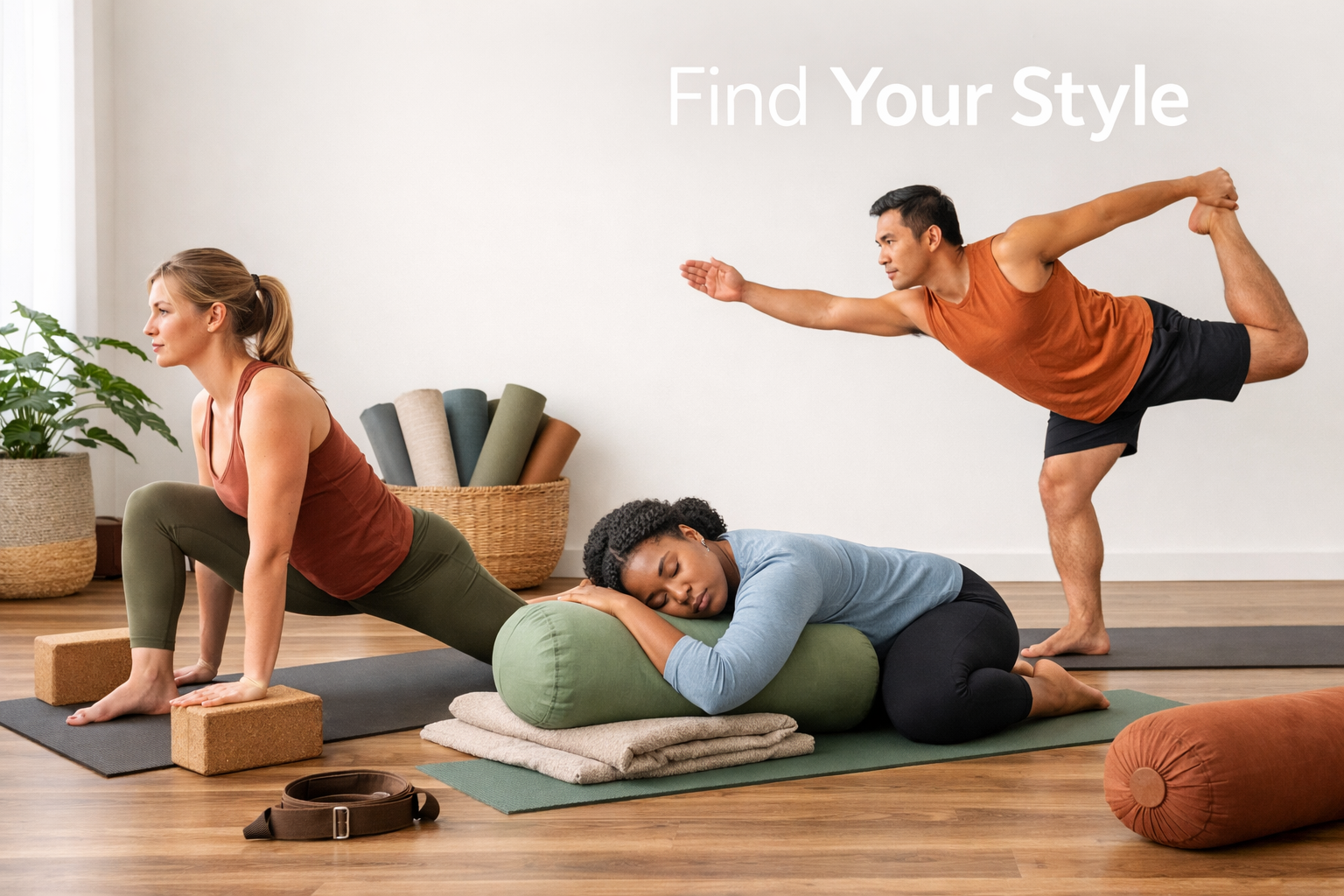
The best yoga style depends on your goals, fitness level, and what you want to feel after class. Here’s a breakdown of the most practiced styles in 2026.
| Style | Pace | Best For | Intensity |
|---|---|---|---|
| Hatha | Slow to moderate | Beginners, general fitness | Low to moderate |
| Vinyasa | Moderate to fast | Cardio, strength, flow | Moderate to high |
| Ashtanga | Fast, structured | Disciplined athletes, consistency | High |
| Yin | Very slow | Flexibility, joint health, recovery | Low |
| Restorative | Very slow, passive | Stress relief, nervous system reset | Very low |
| Hot Yoga (Bikram) | Moderate | Detox feel, intense sweat | High |
| Aerial | Varies | Core strength, playfulness | Moderate |
| Prenatal | Slow, gentle | Pregnancy support | Low |
Vinyasa and Hatha remain the top drivers of participation [1], but the fastest-growing segment is restorative and yin yoga. This shift reflects a broader trend: people are moving away from high-intensity-only training and toward practices that support recovery and long-term health [1].
Choose your style based on these criteria:
- If you want a workout: Vinyasa, Ashtanga, or Hot Yoga
- If you’re stressed or burned out: Restorative or Yin
- If you’re brand new: Hatha or a beginner-specific Vinyasa class
- If you’re pregnant: Prenatal yoga with a certified instructor
- If you want something unconventional: Aerial yoga or yoga combined with breathwork sessions
A common mistake is choosing the most intense style first. If you haven’t practiced before, starting with a vigorous Ashtanga class can lead to frustration or injury. Begin with Hatha or a slow Vinyasa, learn the foundational poses, and then branch out.
What Are the Proven Health Benefits of Yoga?
Yoga improves both physical and mental health across multiple dimensions, and these benefits are well-documented in clinical research.
Physical benefits:
- Flexibility and mobility: Regular practice increases range of motion in joints and lengthens tight muscles. This is particularly valuable for people who sit at desks for long hours.
- Strength: Poses like plank, chair, and warrior sequences build functional strength using bodyweight resistance.
- Balance and coordination: Standing poses and single-leg balances improve proprioception, which becomes increasingly important with age.
- Cardiovascular health: Dynamic styles like Vinyasa elevate heart rate, while even gentle yoga has been associated with lower blood pressure and improved heart rate variability.
- Pain management: Yoga is frequently recommended for chronic lower back pain, with multiple studies supporting its effectiveness compared to standard care.
Mental and emotional benefits:
- Stress reduction: Yoga activates the parasympathetic nervous system, lowering cortisol levels and reducing the body’s stress response. This is the core reason modern practitioners are drawn to the practice, positioning yoga as “the primary counter-measure to the high-cortisol lifestyle” [1].
- Anxiety and depression support: Controlled breathing and mindful movement help regulate mood. Yoga is used as a complementary approach alongside therapy and medication.
- Sleep quality: Evening or restorative yoga sessions can improve sleep onset and duration.
- Focus and cognitive function: The attention required during practice trains concentration skills that carry over into daily life.
“Modern yoga students are seeking regulation and stress management rather than flexibility-focused practice.” [1]
This shift matters. If you’ve been thinking of yoga as “just stretching,” the reality in 2026 is quite different. Studios and online platforms are increasingly framing yoga as a tool for nervous system regulation, and this framing is backed by growing clinical evidence.
For more perspectives on yoga and wellness, visit the Yoga4.biz blog.
How Is Technology Changing Yoga Practice?
Digital platforms and smart equipment are reshaping how and where people practice yoga. The online and yoga software segment is one of the fastest-growing parts of the market [1].
Key technology trends in 2026:
- Studio-branded apps: Members now expect apps for booking classes, managing memberships, watching on-demand content, and staying connected between studio visits [1]. Studios that don’t offer a digital component are losing ground.
- Smart yoga mats: Mats with pressure sensors and app connectivity are projected to grow at a 22% compound annual growth rate through 2028 [2]. These mats provide real-time feedback on alignment and weight distribution.
- Hybrid class models: Many studios offer simultaneous in-person and livestream classes, letting members choose their format on any given day.
- AI-powered personalization: Some platforms now adjust class recommendations based on your practice history, stated goals, and even biometric data from wearable devices.
- Subscription equipment rentals: Particularly in urban areas, subscription models for yoga equipment rentals are gaining traction, with 35% higher adoption rates in cities [2].
About 60% of yoga product sales now originate through digital channels [2], though specialty stores still matter for items where you want to feel the material before buying, like mats and clothing.
Common mistake with digital yoga: Relying exclusively on video classes without ever getting in-person feedback. Even experienced practitioners develop alignment habits they can’t see themselves. Try to get at least occasional in-person instruction or use a smart mat that provides alignment cues.
What Yoga Equipment Do You Actually Need?
You need very little to start, but quality matters more than quantity. Here’s what’s worth your money and what isn’t.
Essential gear:
- Yoga mat: This is your only true essential. A good mat provides cushioning, grip, and a defined practice space. Budget mats ($15-30) work for trying yoga out, but if you practice regularly, invest in a mid-range or premium mat ($60-120) made from natural rubber or TPE. Premium yoga equipment now accounts for nearly 30% of total market revenue [2].
- Comfortable clothing: Anything that allows a full range of motion. You don’t need branded yoga clothing to start, though the yoga clothing market is substantial, projected to grow from $34.37 billion in 2026 to $66.34 billion by 2034 [7].
Helpful but not required:
- Yoga blocks (2): Cork or foam blocks help you reach the floor in standing poses and support proper alignment. Cost: $10-25 for a pair.
- Yoga strap: Useful for hamstring stretches and shoulder openers if you have limited flexibility. Cost: $8-15.
- Bolster: Essential for restorative yoga. A firm, cylindrical pillow that supports the body in passive poses. Cost: $40-70.
Skip these (at least at first):
- Yoga wheels (niche use, not beginner-friendly)
- Expensive yoga towels (unless you do hot yoga regularly)
- Yoga-specific socks or gloves (barefoot is standard and preferred)
Premiumization is a real trend. Manufacturers like Manduka and Lululemon are investing heavily in sustainable product lines using natural rubber mats and moisture-wicking fabrics [2]. If sustainability matters to you, look for mats made from natural rubber, cork, or recycled materials, and avoid PVC-based mats.
Gaiam leads the market with its comprehensive range of yoga accessories and strategic retail partnerships [2], making it a solid starting point for beginners looking for affordable, widely available gear.
How Should a Beginner Start Practicing Yoga?
Start with short, simple sessions and focus on learning foundational poses correctly before adding complexity or duration.
Step-by-step beginner plan:
- Choose a style: Hatha or beginner Vinyasa. Avoid advanced classes, hot yoga, or Ashtanga until you’ve built a foundation.
- Get a mat: Even a basic one. Practice on a non-slip surface.
- Start with 15-20 minute sessions: Longer isn’t better when you’re learning. Consistency beats duration.
- Learn these 10 foundational poses first:
- Mountain Pose (Tadasana)
- Downward-Facing Dog (Adho Mukha Svanasana)
- Warrior I and II (Virabhadrasana I and II)
- Triangle Pose (Trikonasana)
- Child’s Pose (Balasana)
- Cat-Cow (Marjaryasana-Bitilasana)
- Cobra (Bhujangasana)
- Tree Pose (Vrksasana)
- Seated Forward Fold (Paschimottanasana)
- Practice 3-4 times per week for the first month. This frequency builds muscle memory without causing burnout.
- Add breathwork: Even 5 minutes of conscious breathing before or after your practice amplifies the benefits. Breathwork has become a standalone offering at many studios, with 20-30 minute pranayama sessions growing in popularity [1].
- Get feedback: Attend at least one in-person class or workshop within your first month to check your alignment.
Edge case: yoga with injuries or chronic conditions. If you have back pain, joint issues, or any medical condition, tell your instructor before class. Many poses have modifications, and a good teacher will offer alternatives. Yoga can be therapeutic for many conditions, but only when practiced with appropriate modifications.
To learn more about getting started or finding resources, check out the Yoga4.biz about page.
Should You Practice Yoga at a Studio or at Home?
Both work. The best choice depends on your personality, budget, and schedule.
Studio pros:
- Direct feedback from instructors corrects alignment issues before they become habits
- Community and accountability keep you showing up
- Access to props, heated rooms, and specialized classes
- Social connection, which is itself a health benefit
Studio cons:
- Monthly memberships typically range from $80-200 depending on location
- Fixed class schedules may not fit yours
- Travel time adds friction
Home practice pros:
- Practice anytime, any duration
- No commute
- Lower cost (many apps run $10-30/month; free content exists on YouTube)
- Privacy for beginners who feel self-conscious
Home practice cons:
- No real-time alignment correction
- Easier to skip or cut sessions short
- Requires self-motivation
The hybrid model is winning in 2026. Most committed practitioners do both: attending studio classes 1-2 times per week for instruction and community, and supplementing with home practice on other days. Studios that offer branded apps for on-demand content make this especially seamless [1].
Decision rule: If you’re a complete beginner, start with at least 4-6 studio classes to learn proper form. If you’re experienced and self-motivated, home practice with occasional studio check-ins works well. If budget is tight, start at home with reputable free content and invest in a studio membership once you’ve confirmed yoga is a practice you want to maintain.
For additional yoga content and community, visit Yoga4.biz.
What Does the Yoga Market Look Like in 2026?
The yoga industry is experiencing substantial growth across every segment, from studios to products to digital platforms.
Market size and trajectory:
- The global yoga product market was valued at $6.896 billion in 2024 and is projected to reach $14.89 billion by 2034, representing an 11.9% compound annual growth rate [2]
- The overall global yoga market is projected to reach approximately $258 billion by 2033 [1]
- The yoga and wellness kits packaging market alone is forecast to reach $4.86 billion by 2036 [5]
Regional growth:
The fastest growth is happening in Asia Pacific. India and Southeast Asia are demonstrating year-over-year sales increases of 28% and 19% respectively [2]. Localized product designs tailored to these markets could unlock $1.2 billion in incremental market value [2].
What’s driving this growth:
- Increased awareness of mental health and stress management
- Digital accessibility lowers barriers to entry
- Corporate wellness programs incorporating yoga
- Growing scientific evidence supports yoga’s health benefits
- Premiumization of yoga products and experiences
For practitioners, this growth means more options: more studios, more online platforms, more specialized styles, and better equipment at various price points. It also means more noise, so choosing quality instruction and reputable sources becomes more important.
If you’re interested in how yoga connects to broader wellness practices, explore the Yoga4.biz content library.
How Are Breathwork and Meditation Reshaping Yoga?
Breathwork and meditation have moved from optional extras to central components of modern yoga practice. This is one of the most significant shifts in how yoga is taught and experienced in 2026.
Breathwork (Pranayama):
Breathwork has become a standalone offering at many studios [1]. Sessions typically run 20-30 minutes and focus on specific breathing patterns designed to activate the parasympathetic nervous system, reduce anxiety, or increase energy. Common techniques include:
- Box breathing: Equal counts of inhale, hold, exhale, hold (often 4 counts each)
- Nadi Shodhana (alternate nostril breathing): Balances the nervous system
- Kapalabhati (skull-shining breath): Energizing, rapid exhalations
- Extended exhale breathing: Longer exhales than inhales to promote calm
Meditation integration:
Rather than tacking on a 2-minute savasana at the end of class, instructors are now integrating meditation throughout the class. This includes longer pauses between sequences, guided awareness during holds, and extended rest periods to create “intentionally quiet, offline experiences” [1].
Why this matters for you: If you’ve been practicing yoga purely for the physical workout, adding even 5-10 minutes of breathwork or meditation to your routine can significantly enhance the stress-reduction and mental clarity benefits. Many practitioners report that breathwork is the single most impactful element of their practice for managing daily stress.
For questions about incorporating these practices, reach out to yoga professionals who can guide your approach.
Frequently Asked Questions
How often should I practice yoga? For noticeable benefits, aim for 3-4 sessions per week. Even 2 sessions weekly will improve flexibility and reduce stress over time. Daily practice is ideal but not necessary, especially for beginners.
Can I do yoga if I’m not flexible? Yes. Flexibility is a result of yoga, not a prerequisite. Every pose can be modified with blocks, straps, or adjusted positioning. Start where you are.
Is yoga enough exercise on its own? It depends on the style and your goals. Vigorous Vinyasa or Ashtanga can serve as a complete workout. If your goals include significant muscle building or high-level cardiovascular fitness, you may want to supplement yoga with strength training or cardio.
How long will it take to see results from yoga? Most people notice improved flexibility and reduced stress within 2-4 weeks of consistent practice (3+ times per week). Strength gains and significant postural changes typically take 2-3 months.
Is hot yoga safe? For most healthy adults, yes, but stay well-hydrated and listen to your body. People with cardiovascular conditions, heat sensitivity, or who are pregnant should consult a doctor first. If you feel dizzy or nauseous, leave the heated room immediately.
What’s the difference between yoga and Pilates? Yoga emphasizes flexibility, breathwork, and mindfulness alongside strength. Pilates focuses primarily on core strength, spinal alignment, and controlled movement. Both are valuable, and many practitioners do both.
Do I need a certified instructor? For in-person classes, yes. Look for instructors with a Yoga Alliance RYT-200 or RYT-500 certification. For home practice via apps or videos, choose platforms with credentialed teachers.
Can yoga help with back pain? Yoga is one of the most commonly recommended complementary approaches for chronic lower back pain. Gentle styles like Hatha or Yin, with appropriate modifications, tend to be most effective. Avoid deep backbends or forward folds without guidance if you have acute back issues.
What time of day is best for yoga? There’s no single best time. Morning practice energizes and sets a positive tone. Evening practice promotes relaxation and better sleep. The best time is whenever you’ll actually do it consistently.
Is yoga a religion? No. Yoga has roots in Hindu, Buddhist, and Jain traditions, but modern postural yoga, as practiced in studios worldwide, is a secular physical and mental health practice. You can engage with or set aside the philosophical elements as you prefer.
Key Takeaways
- Yoga combines physical postures, breathing techniques, and meditation to improve both body and mind
- Over 300 million people practice yoga globally, with the market projected to reach $258 billion by 2033 [1][2]
- Vinyasa and Hatha are the most popular styles, but restorative and yin yoga are growing fastest as people prioritize nervous system health [1]
- You need minimal equipment to start: a decent mat and comfortable clothing are sufficient
- Breathwork has become a standalone practice, not just a warm-up exercise [1]
- Digital platforms and smart equipment are making yoga more accessible and personalized than ever [1][2]
- Beginners should start with 15-20 minute sessions, 3-4 times per week, focusing on foundational poses
- The hybrid model of studio plus home practice offers the best of both worlds
- Asia Pacific is the fastest-growing yoga market, with India and Southeast Asia leading adoption [2]
- Consistency matters more than intensity, duration, or style selection
Conclusion
Yoga in 2026 is more accessible, more evidence-backed, and more varied than at any point in its long history. Whether you’re drawn to the physical challenge of a vigorous Vinyasa flow, the deep calm of a restorative session, or the mental clarity that comes from breathwork and meditation, there’s a practice that fits your life.
Your next steps:
- Pick a style from the table above based on your current goals
- Get a mat and try 3 sessions this week, each 15-20 minutes, using a free YouTube class or app trial
- Attend one in-person class within the next two weeks for alignment feedback
- Add 5 minutes of breathwork to the end of each session
- Reassess after 30 days: notice what’s changed in your body, stress levels, and sleep quality, then adjust your style or frequency accordingly
The barrier to entry has never been lower. The question isn’t whether yoga will benefit you. It’s whether you’ll start.
References
[1] Yoga Trends – https://www.glofox.com/blog/yoga-trends/ [2] Yoga Market 31236 – https://www.intelmarketresearch.com/yoga-market-31236 [5] Yoga And Wellness Kits Packaging Market Forecast 2026 2036 – https://wellness.einnews.com/amp/pr_news/893319026/yoga-and-wellness-kits-packaging-market-forecast-2026-2036-market-to-reach-usd-4-860-million-by-2036-at-13-1-cagr [7] Yoga Clothing Market 106312 – https://www.fortunebusinessinsights.com/yoga-clothing-market-106312