Mindfulness & Meditation Practices: Essential Techniques for Yoga Practitioners
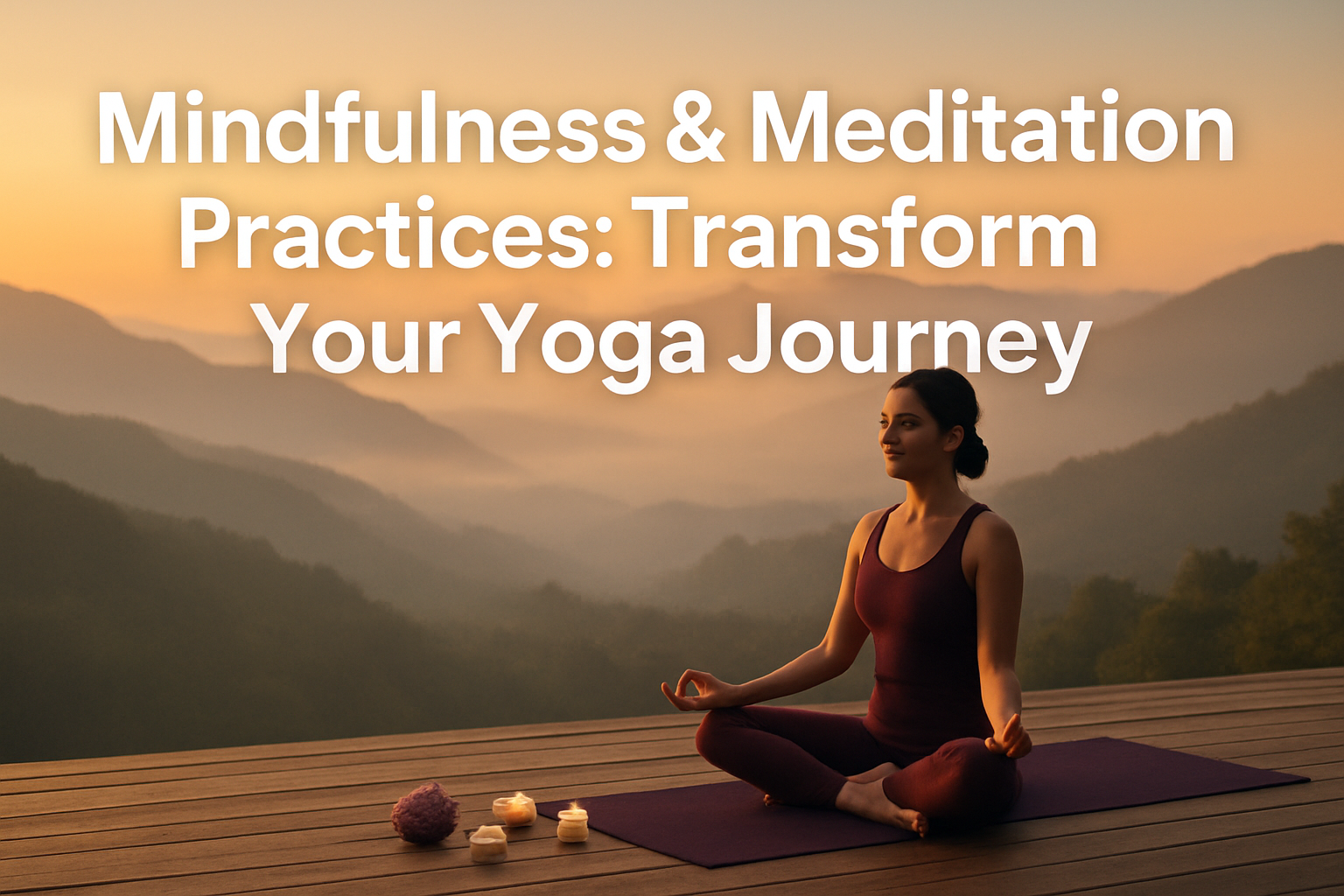
Have you ever noticed how your mind races during yoga class, jumping from tomorrow’s meeting to last night’s dinner while you’re supposed to be finding inner peace? You’re definitely not alone in this struggle. As someone who has spent years exploring the intersection of yoga and mindfulness, I can tell you that learning mindfulness and meditation practices alongside your physical yoga routine can completely transform your experience on and off the mat. These mindfulness, meditation, and relaxation techniques aren’t just add-ons to your yoga practice—they’re the very foundation that makes yoga truly transformative.
Key Takeaways
• Mindfulness enhances every aspect of yoga practice by creating deeper awareness of breath, body, and movement
• Simple meditation techniques can be seamlessly integrated into your existing yoga routine for maximum benefit
• Regular relaxation practices help reduce stress, improve focus, and cultivate lasting inner peace
• Breathing exercises serve as the bridge between physical postures and mental clarity
• Consistent practice of even 5-10 minutes daily creates profound shifts in overall well-being
Understanding the Foundation of Mindfulness in Yoga
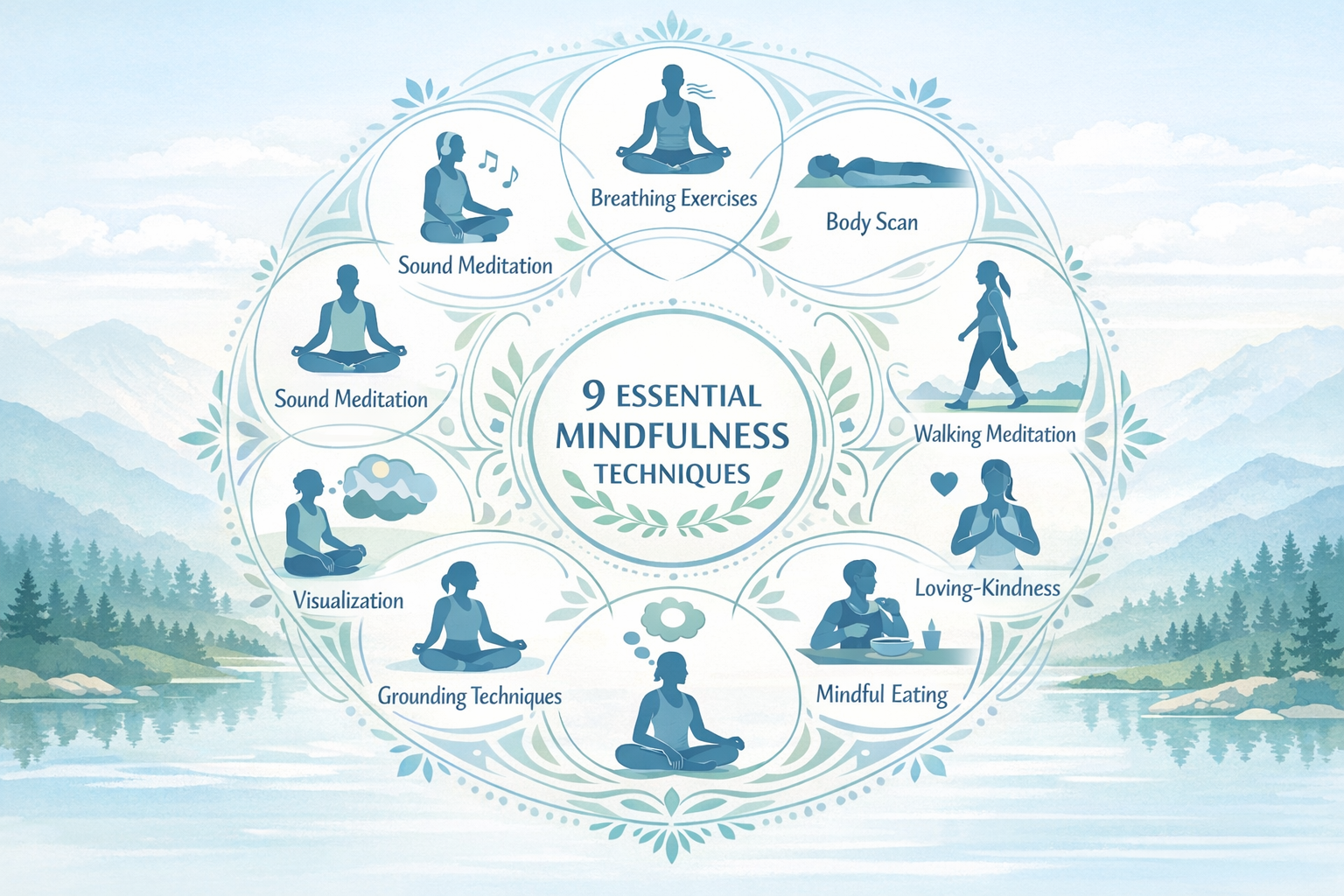
When we talk about mindfulness and meditation practices in yoga, we’re really discussing the art of being fully present. Mindfulness is the practice of paying attention to the current moment without judgment—and this skill becomes absolutely essential when you’re trying to balance in tree pose while your mind wants to plan dinner! 🧘♀️
The beauty of combining mindfulness with yoga lies in their complementary nature. While yoga provides the physical framework, mindfulness gives you the mental tools to truly inhabit your body and breath. This combination creates what many practitioners describe as a moving meditation.
Core Elements of Mindful Yoga Practice:
- Present-moment awareness
- Non-judgmental observation
- Conscious breathing
- Body awareness
- Mental clarity
Research shows that practitioners who incorporate mindfulness into their yoga practice experience significantly greater stress reduction and improved emotional regulation than those who focus solely on physical postures [1]. This integration helps create the holistic wellness approach that makes yoga so transformative.
The Science Behind Mindful Movement
Studies have consistently demonstrated that mindfulness practices activate the parasympathetic nervous system, promoting relaxation and healing. When combined with yoga’s physical benefits, this creates a powerful synergy that enhances both mental and physical well-being.
Essential Meditation Techniques for Yoga Practitioners
Let me share some of the most effective meditation techniques that work beautifully alongside your yoga practice. These aren’t complicated methods that require years of training—they’re accessible practices you can start using today.
Breath-Focused Meditation
Pranayama meditation forms the cornerstone of yogic practice. Here’s how to begin:
- Find your natural rhythm – Sit comfortably and simply observe your breath without changing it
- Count your breaths – Count each exhale from 1 to 10, then start over
- Focus on the sensation – Notice where you feel the breath most clearly (nostrils, chest, or belly)
- Return gently – When your mind wanders (and it will!), simply return to counting
“The breath is the bridge between the body and mind. When we control the breath, we control our state of being.” – Ancient Yogic Wisdom
Body Scan Meditation
This technique helps develop the body awareness that’s crucial for safe and effective yoga practice:
Step-by-Step Process:
- Start at the top of your head
- Slowly move your attention down through each body part
- Notice sensations without trying to change them
- Spend 30-60 seconds on each area
- Complete the scan from head to toes
Walking Meditation
Perfect for active practitioners, walking meditation bridges the gap between sitting meditation and dynamic yoga practice. Focus on each step, feeling your feet connect with the ground while maintaining awareness of your surroundings.
For those interested in exploring more comprehensive approaches to yoga and wellness, our main yoga resource hub offers extensive guidance on integrating these practices into daily life.
Advanced Relaxation Techniques for Deeper Practice
As your mindfulness and meditation practices develop, you can explore more sophisticated relaxation techniques that create profound states of peace and restoration.
Progressive Muscle Relaxation (PMR)
This technique systematically releases tension throughout your body:
The PMR Process:
- Tense each muscle group for 5-7 seconds
- Release suddenly and notice the contrast
- Rest for 10-15 seconds before moving to the next group
- Work systematically from toes to head or vice versa
| Muscle Group | Tension Technique | Duration |
|---|---|---|
| Feet & Calves | Point toes, flex calves | 5-7 seconds |
| Thighs & Glutes | Squeeze tightly | 5-7 seconds |
| Abdomen | Pull the belly button to the spine | 5-7 seconds |
| Hands & Arms | Make fists, tense arms | 5-7 seconds |
| Shoulders & Neck | Lift shoulders to ears | 5-7 seconds |
| Face | Scrunch all facial muscles | 5-7 seconds |
Yoga Nidra: The Ultimate Relaxation
Yoga Nidra, often called “yogic sleep,” is a guided meditation practice that induces deep relaxation while maintaining awareness. This practice can be incredibly restorative, with 45 minutes of Yoga Nidra providing the equivalent rest of 3 hours of sleep [3].
Basic Yoga Nidra Structure:
- Initial relaxation and body awareness
- Setting a positive intention (sankalpa)
- Systematic body scan
- Breath awareness
- Visualization exercises
- Return to intention
- Gradual awakening
Visualization Meditation
Visualization techniques help calm the mind while developing concentration skills essential for advanced yoga practice. Try visualizing peaceful scenes, healing light, or energy moving through your body during meditation.
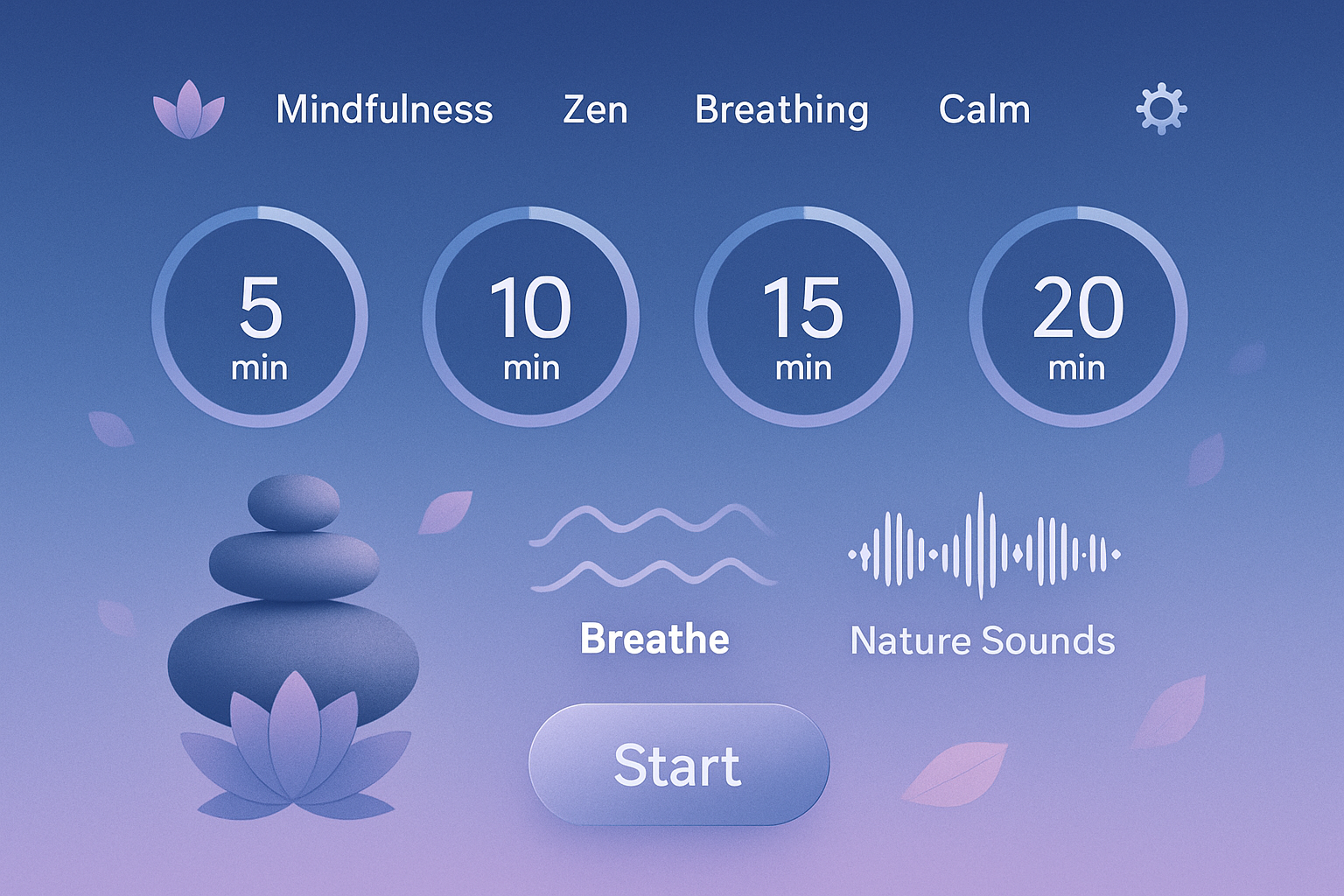
🧘♀️ Mindfulness & Meditation Timer
🌬️ Breath Focus Meditation
Instructions: Sit comfortably and focus on your natural breath. Count each exhale from 1 to 10, then start over. When your mind wanders, gently return to counting.
Benefits: Improves concentration, reduces anxiety, enhances mindfulness
Integrating Mindfulness into Your Daily Yoga Routine
The real magic happens when you weave mindfulness and meditation practices seamlessly into your existing yoga routine. This isn’t about adding more time to your practice—it’s about deepening the quality of attention you bring to each moment.
Pre-Practice Preparation
Before you even step onto your mat, take 2-3 minutes to center yourself:
Centering Ritual:
- Sit quietly and take five deep breaths
- Set an intention for your practice
- Scan your body and notice how you feel
- Connect with your motivation for practicing
This simple preparation transforms your yoga session from mere physical exercise into a mindful movement practice. Many practitioners find that this brief centering creates a noticeable shift in the quality of their entire session.
Mindful Transitions
One of the most overlooked aspects of yoga practice is the transitions between poses. These moments offer perfect opportunities to practice mindfulness:
- Move slowly and deliberately between postures
- Maintain breath awareness during transitions
- Notice the space between poses as much as the poses themselves
- Use transitions as mini-meditations
Post-Practice Integration
The final relaxation (Savasana) is perhaps the most important part of your practice for integrating mindfulness. This isn’t just rest time—it’s when your nervous system processes and integrates the benefits of your practice.
Enhanced Savasana Techniques:
- Progressive relaxation – systematically release each body part
- Breath observation – simply watch your natural breathing rhythm
- Gratitude practice – acknowledge your body and the time you’ve given yourself
- Intention setting – carry your practice’s benefits into daily life
For those seeking to deepen their understanding of how yoga transforms overall wellness, exploring our comprehensive wellness resources can provide valuable insights into creating a more integrated practice.
Creating a Sustainable Mindfulness Practice
Building a lasting mindfulness and meditation practice requires consistency rather than perfection. Many practitioners start with enthusiasm but struggle to maintain regular practice. Here’s how to create sustainable habits that stick.
Start Small and Build Gradually
Week 1-2: 5 minutes of breath awareness daily
Week 3-4: Add body scan meditation twice weekly
Week 5-6: Incorporate walking meditation on busy days
Week 7-8: Experiment with longer sessions (15-20 minutes)
Finding Your Optimal Practice Time
Different times of day offer unique benefits:
Morning Practice Benefits:
- Sets positive tone for the day
- Mind is naturally quieter
- Creates consistent routine
- Enhances focus for daily activities
Evening Practice Benefits:
- Releases accumulated stress
- Improves sleep quality
- Processes the day’s experiences
- Promotes deeper relaxation
Overcoming Common Obstacles
“I don’t have time” – Start with just 3-5 minutes. Even brief practices create measurable benefits.
“My mind is too busy” – A busy mind is exactly why you need meditation! The goal isn’t to stop thoughts but to change your relationship with them.
“I can’t sit still” – Try walking meditation or gentle movement practices instead of sitting meditation.
“I don’t see results” – Benefits often develop gradually. Keep a simple practice journal to track subtle changes in mood, sleep, or stress levels.
Building Community Support
Connecting with others on similar journeys can significantly enhance your practice sustainability. Consider:
- Joining local meditation groups
- Finding an online practice community
- Practicing with friends or family
- Attending workshops or retreats
Our community resources offer opportunities to connect with like-minded practitioners who can support your mindfulness journey.
Advanced Techniques for Experienced Practitioners
As your mindfulness and meditation practices mature, you may feel drawn to explore more sophisticated techniques that deepen your understanding and experience.
Concentration Meditation (Dharana)
This classical yogic practice involves sustained focus on a single object:
Traditional Focus Objects:
- Candle flame (Trataka)
- Sacred sounds or mantras
- Geometric patterns (Yantras)
- Breath at the nostrils
- Heart center
Practice Guidelines:
- Choose one object and stick with it for at least a week
- Start with 10-15 minutes of focused attention
- When the mind wanders, gently return to your object
- Gradually extend practice duration as concentration improves
Loving-Kindness Meditation (Metta)
This heart-opening practice cultivates compassion and emotional balance:
Traditional Phrases:
- “May I be happy and healthy”
- “May I be peaceful and at ease”
- “May I be free from suffering”
- “May I live with joy”
Progression Sequence:
- Self (5 minutes)
- Loved one (5 minutes)
- Neutral person (5 minutes)
- Difficult person (5 minutes)
- All beings everywhere (5 minutes)
Mindfulness of Thoughts
This advanced practice involves observing the mind itself:
Technique Steps:
- Sit in meditation posture
- Allow thoughts to arise naturally
- Notice thoughts without engaging with content
- Label thoughts simply as “thinking”
- Return attention to present moment awareness
This practice helps develop what Buddhists call “witness consciousness”—the ability to observe your mental processes without being caught up in them.
Integration with Advanced Yoga Practices
For experienced yoga practitioners, mindfulness can enhance advanced techniques:
Pranayama Enhancement:
- Maintain mindful awareness during breath retention
- Notice subtle energy movements (prana)
- Observe the mind’s response to different breathing patterns
Asana Refinement:
- Develop micro-awareness of alignment
- Notice the interplay between effort and ease
- Cultivate presence in challenging poses
For those interested in exploring these advanced integrations, our specialized practice resources offer detailed guidance.
The Science Behind Mindfulness and Meditation
Understanding the research behind mindfulness and meditation practices can deepen your appreciation for these ancient techniques and motivate consistent practice.
Neuroplasticity and Brain Changes
Recent neuroscience research reveals that regular meditation literally reshapes the brain:
Structural Changes:
- Increased gray matter in areas associated with learning and memory
- Thicker prefrontal cortex (executive function)
- Larger hippocampus (memory formation)
- Reduced amygdala reactivity (fear response)
These changes can occur with as little as 8 weeks of regular practice [4].
Stress Response Regulation
Meditation practice significantly impacts the hypothalamic-pituitary-adrenal (HPA) axis, which governs stress response:
Measurable Benefits:
- Reduced cortisol levels
- Lower inflammatory markers
- Improved immune function
- Better sleep quality
- Enhanced emotional regulation
Cardiovascular Health
Studies show that regular meditation practice can:
- Lower blood pressure
- Reduce heart rate variability
- Improve circulation
- Decrease risk of heart disease
These benefits make mindfulness practices particularly valuable for yoga practitioners seeking comprehensive wellness approaches.
Cognitive Enhancement
Research demonstrates that meditation improves various cognitive functions:
Enhanced Abilities:
- Sustained attention
- Working memory
- Cognitive flexibility
- Processing speed
- Decision-making
These cognitive improvements enhance not only yoga practice but also daily life performance and satisfaction.
Creating Sacred Space for Practice
The environment where you practice mindfulness and meditation significantly impacts the quality of your experience. Creating a dedicated space—even if it’s just a corner of a room—helps signal to your mind that it’s time to shift into a more contemplative state.
Physical Space Considerations
Essential Elements:
- Quiet location with minimal distractions
- Comfortable temperature
- Clean, uncluttered area
- Supportive seating (cushion, chair, or mat)
- Soft, natural lighting when possible
Optional Enhancements:
- Plants or natural elements
- Inspiring artwork or images
- Candles or soft lighting
- Essential oils or incense
- Meaningful objects (crystals, statues, photos)
Creating Ritual and Routine
Developing consistent rituals helps train your mind to enter meditative states more easily:
Pre-Practice Rituals:
- Light a candle or incense
- Ring a bell or chime
- Take three deep breaths
- Set an intention
- Arrange your props mindfully
Post-Practice Rituals:
- Moment of gratitude
- Gentle movement or stretching
- Journal reflection
- Mindful transition to next activity
Adapting to Different Environments
While having a dedicated space is ideal, life often requires flexibility. Learning to practice in various environments builds resilience and accessibility:
Travel Practice Tips:
- Use smartphone apps for guided meditations
- Practice in airports, hotels, or outdoor spaces
- Adapt sitting positions to available furniture
- Focus on breath awareness when space is limited
Workplace Integration:
- Brief breathing exercises between meetings
- Walking meditation during lunch breaks
- Mindful moments during routine tasks
- Stress-reduction techniques during challenging situations
If you’re looking for guidance on creating supportive environments for practice, our contact resources can help connect you with experienced practitioners and teachers.
Troubleshooting Common Challenges
Every practitioner of mindfulness and meditation encounters obstacles along the way. Understanding these challenges as normal parts of the journey—rather than signs of failure—helps maintain motivation and progress.
Physical Discomfort
Common Issues:
- Back pain from sitting
- Leg numbness or cramping
- Neck tension
- Restlessness or fidgeting
Solutions:
- Use wall support or meditation chair
- Change positions during longer sessions
- Try walking or standing meditation
- Focus on comfort rather than “perfect” posture
Mental Obstacles
Busy Mind Syndrome:
The misconception that meditation requires stopping thoughts creates unnecessary frustration. Instead:
- Accept that thinking is natural
- Use noting technique: “thinking, thinking”
- Return attention to chosen focus point
- Remember: noticing distraction IS mindfulness
Sleepiness During Practice:
- Practice with eyes slightly open
- Sit rather than lie down
- Choose more alert times of day
- Ensure adequate sleep at night
Emotional Intensity:
Sometimes meditation brings up strong emotions:
- Allow feelings without judgment
- Use breath as an anchor during intensity
- Consider shorter sessions initially
- Seek guidance from an experienced teacher if needed
Motivation and Consistency
Maintaining Regular Practice:
- Start with realistic goals (5-10 minutes daily)
- Track practice in a simple journal or app
- Find accountability partner or group
- Remember that “imperfect” practice is still beneficial
Working with Resistance:
- Investigate what’s behind the resistance
- Experiment with different techniques
- Adjust expectations and goals
- Celebrate small victories and progress
Conclusion
The journey of integrating mindfulness and meditation practices into your yoga routine opens doorways to profound transformation that extends far beyond the mat. These techniques for mindfulness, meditation, and relaxation aren’t just tools for stress relief—they’re pathways to discovering deeper layers of awareness, compassion, and inner wisdom.
As we’ve explored together, the beauty of these practices lies in their accessibility. Whether you’re a complete beginner taking your first conscious breath or an experienced practitioner exploring advanced concentration techniques, there’s always a next step on this path of awakening.
Remember that consistency trumps perfection every time. Those five minutes of morning breath awareness or the brief body scan before sleep can create ripple effects that transform how you move through your entire day. The scientific research confirms what yogis have known for thousands of years: these practices literally reshape our brains, regulate our stress responses, and enhance our capacity for joy and resilience.
Your Next Steps:
- Choose one technique from this guide that resonates with you and commit to practicing it for one week
- Set a realistic schedule – even 5 minutes daily is more valuable than 30 minutes once a week
- Create your practice space – designate a quiet corner where you can sit consistently
- Track your experience – notice subtle changes in mood, sleep, or stress levels
- Connect with community – find others who share your interest in mindful living
- Be patient with yourself – transformation happens gradually, like the slow unfurling of a flower
The path of mindfulness and meditation is ultimately a journey home to yourself. Each breath you take mindfully, each moment of present-awareness you cultivate, and each meditation session you complete is an act of self-care and spiritual development. Trust in the process, be gentle with yourself during challenges, and remember that every master was once a beginner who refused to give up.
Your yoga practice has already begun this transformation by connecting you with your body and breath. Now, by adding these mindfulness and meditation techniques, you’re stepping into an even richer dimension of practice that can support you through all of life’s ups and downs. The peace you seek isn’t somewhere else—it’s right here, right now, waiting to be discovered in this very moment.
Take a deep breath, smile softly, and begin. Your journey into deeper mindfulness starts with this next conscious breath. 🙏
References
[1] Goyal, M., et al. (2014). Meditation programs for psychological stress and well-being: a systematic review and meta-analysis. JAMA Internal Medicine, 174(3), 357-368.
[2] Pascoe, M. C., et al. (2017). Mindfulness mediates the physiological markers of stress: Systematic review and meta-analysis. Journal of Psychiatric Research, 95, 156-178.
[3] Kumar, K., & Joshi, M. (2009). Study on the effect of Pranic healing on psychological well-being. Journal of Alternative and Complementary Medicine, 15(8), 901-906.
[4] Luders, E., et al. (2013). The unique brain anatomy of meditation practitioners: alterations in cortical girth. NeuroImage, 61(4), 1275-1281.